






AI should make work easier
- Less manual work
- Faster access to information
- More consistent results
- More time for important tasks
Shortcutters is a Ukrainian applied AI studio created by a small interdisciplinary team.
We bring together experience in technology, artificial intelligence, product development and creative production.
We love digging into new things, finding non-obvious connections and turning interesting ideas into solutions that actually work.
A shortcut is a shorter, more direct path to a goal, or a way to complete an action without unnecessary steps.
At work, that shortcut may be one precise prompt, an internal assistant, or a system that brings several tools together. The format changes, but the principle remains: find the most fitting path for a specific task. That is how Shortcutters got its name.
We believe technology should remove what's unnecessary, not create new complexity. It should free up human attention, not demand even more control.
AI should strengthen people where that makes sense, and leave them what truly needs experience, thinking, creativity and responsibility.
For us, a good result isn't more technology in the work — it's more room for what actually matters.
We study how the process works, find the right place for AI and build a solution that is easy to use in everyday work.
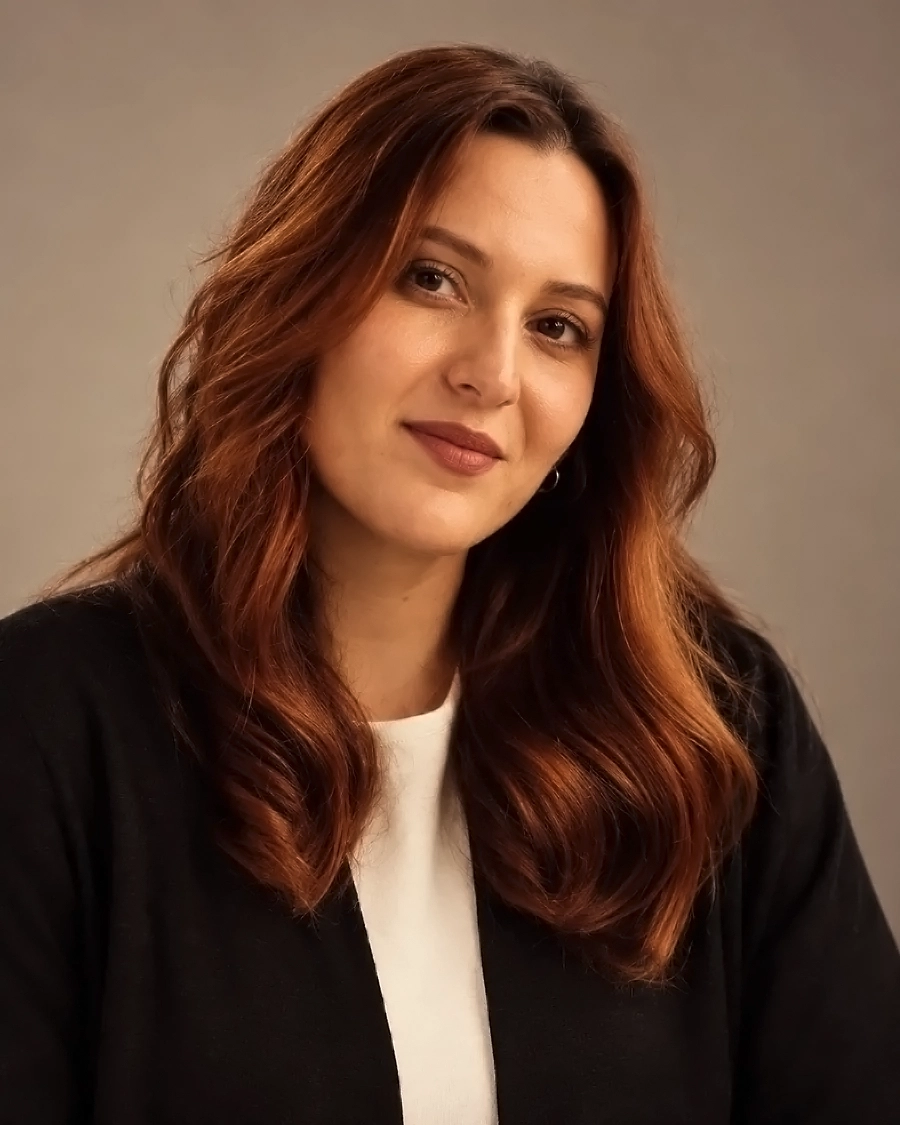
Your first point of contact at Shortcutters. Over two years in the crypto industry taught her to think in systems: to spot patterns, structure complex requests and turn them into a clear direction for the team. She coordinates a project from research through delivery.
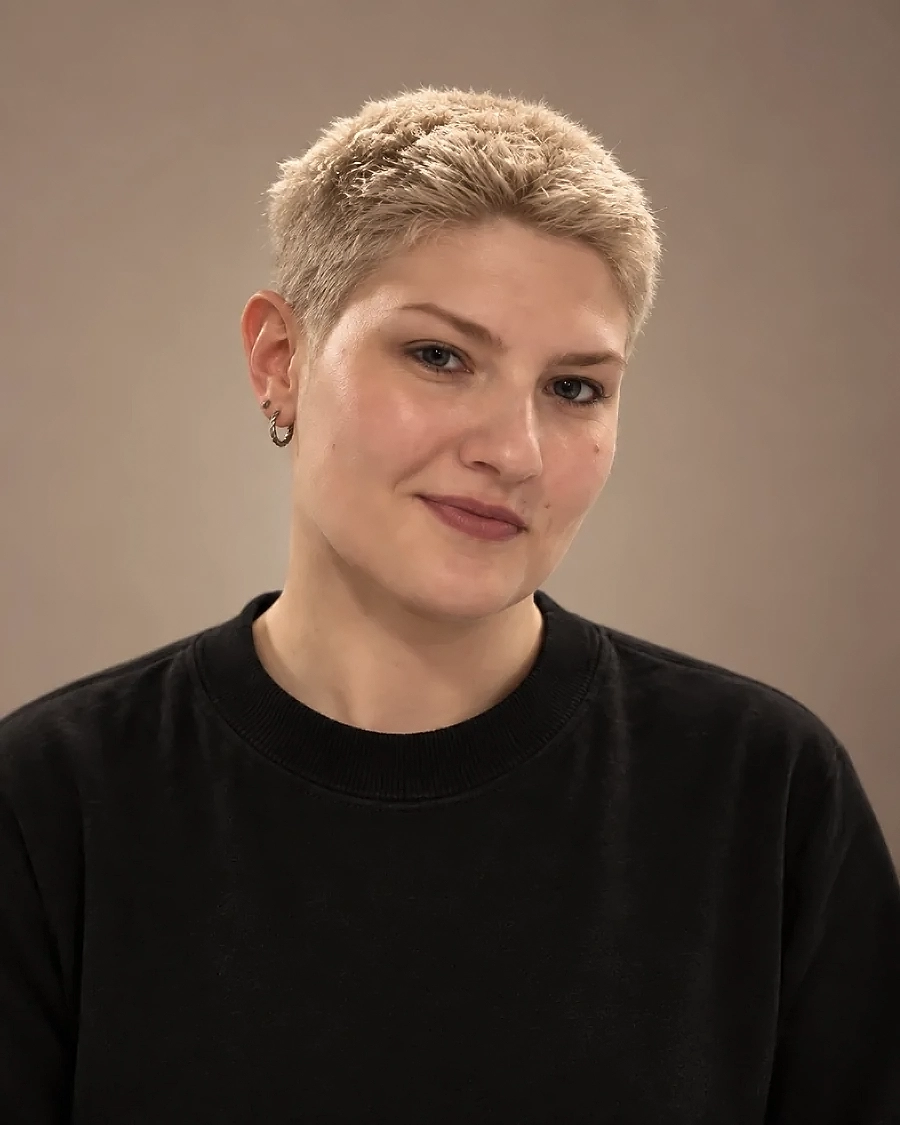
Leads the development and adoption of Shortcutters solutions, from the first prototype to integration into a client workflow. She has over five years of technical experience in automation, internal AI tools and generative systems.

Supports solution development through research, testing, documentation and the technical delivery of Shortcutters projects.
We start by understanding how work is organized: what happens in practice, where things get stuck and which changes are actually useful. Only then do we choose an approach and decide whether AI is needed at all.
Our goal is not just to hand over a tool. The result should become part of real work, rather than an experiment that is slowly forgotten.
We do this in three steps.We talk to the people doing the work and look at what really happens: which steps repeat, where context gets lost, what needs manual support and who holds the process together. This clarifies what is worth changing and what is better left alone.
Once the cause is clear, we test possible approaches and choose the one that fits the specific task. When useful, we begin with a small prototype to test the key assumption before full implementation.
We help embed the solution into the team’s regular work, prepare documentation, teach people how to use it and provide what they need to work independently. After launch, we check how it works in practice.
Preparing tattoo transfers without an unnecessary manual stage
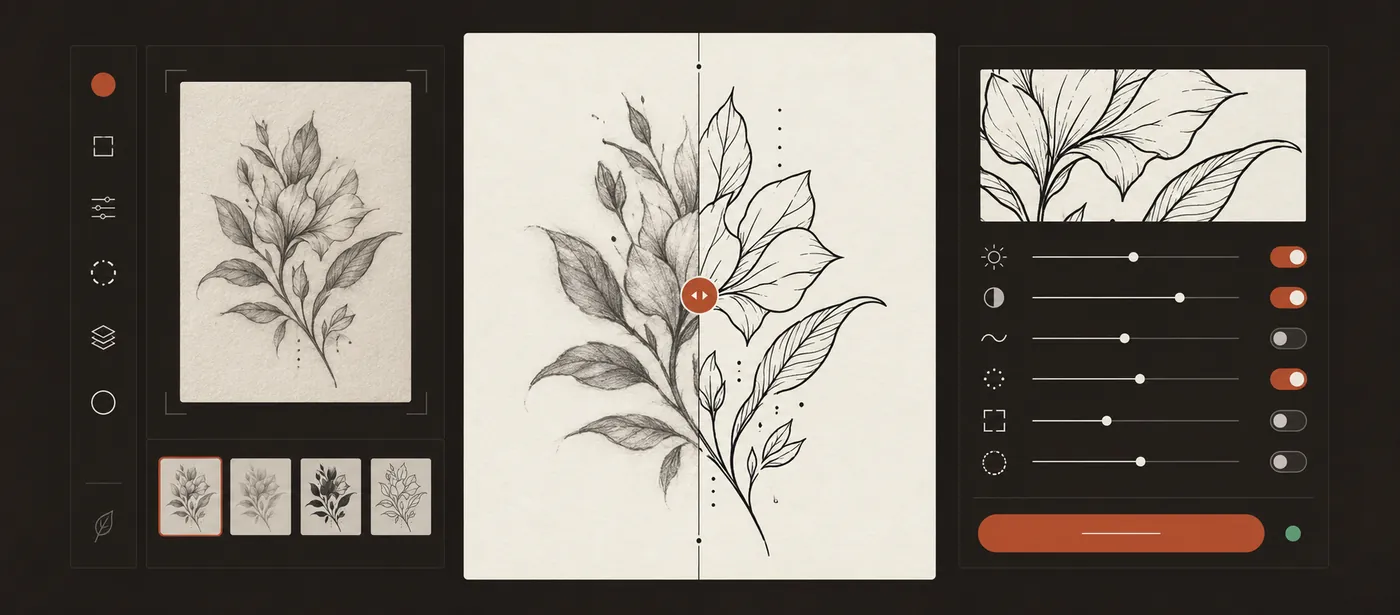
A tattoo artist had to trace each source image manually. General tools did not preserve the details needed for a transfer.
A structured prompt with clear image-processing rules works in the free ChatGPT plan, with no separate paid subscription, and makes transfer preparation repeatable.
Finding and adding information in one internal assistant
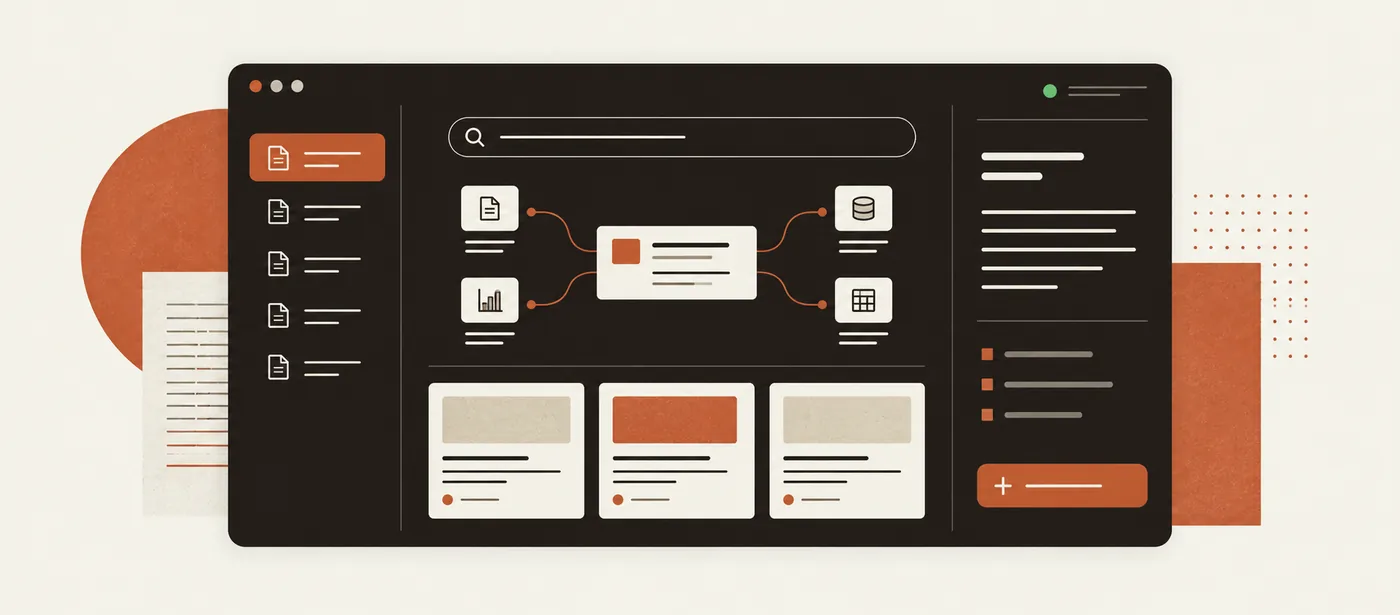
Knowledge was stored in a database, while searching for context and adding new information remained separate daily actions.
One internal assistant now supports both finding necessary context and adding new data to the knowledge base.
A reusable prompt system for image generators
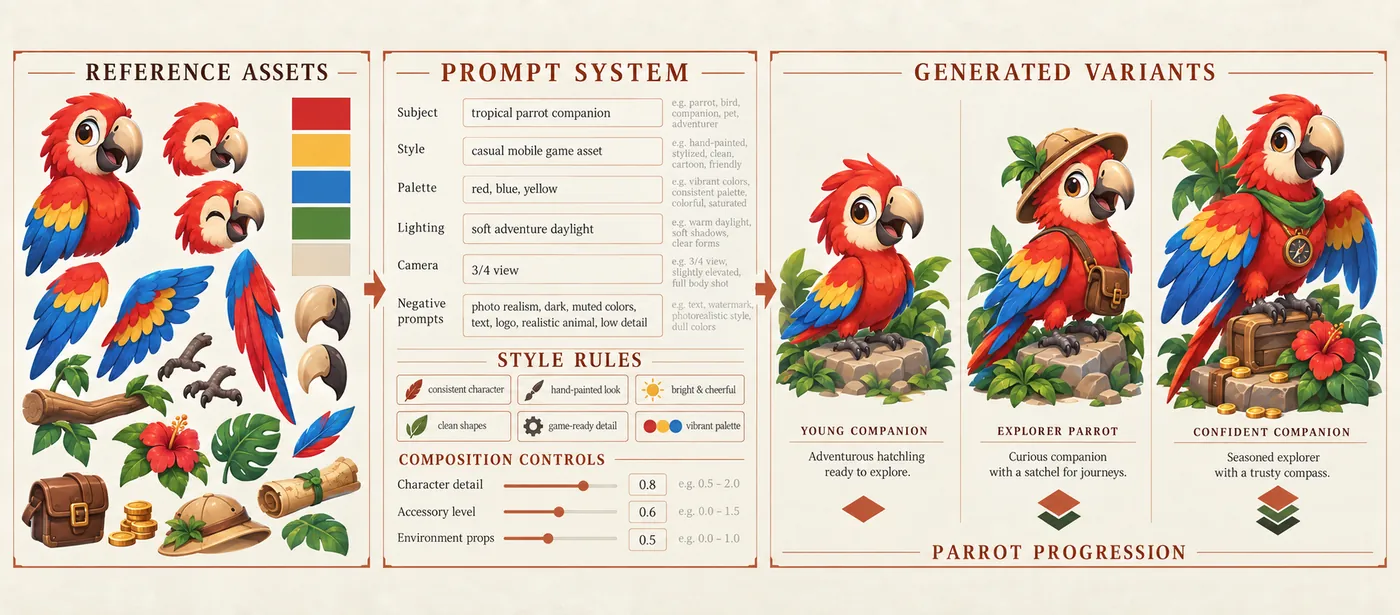
A series of images needed a consistent visual style, but each generation still required manual correction and alignment.
A structured set of prompts, style rules and presets helped keep a consistent style and get more stable results across different generators.
Image generation as part of the production workflow
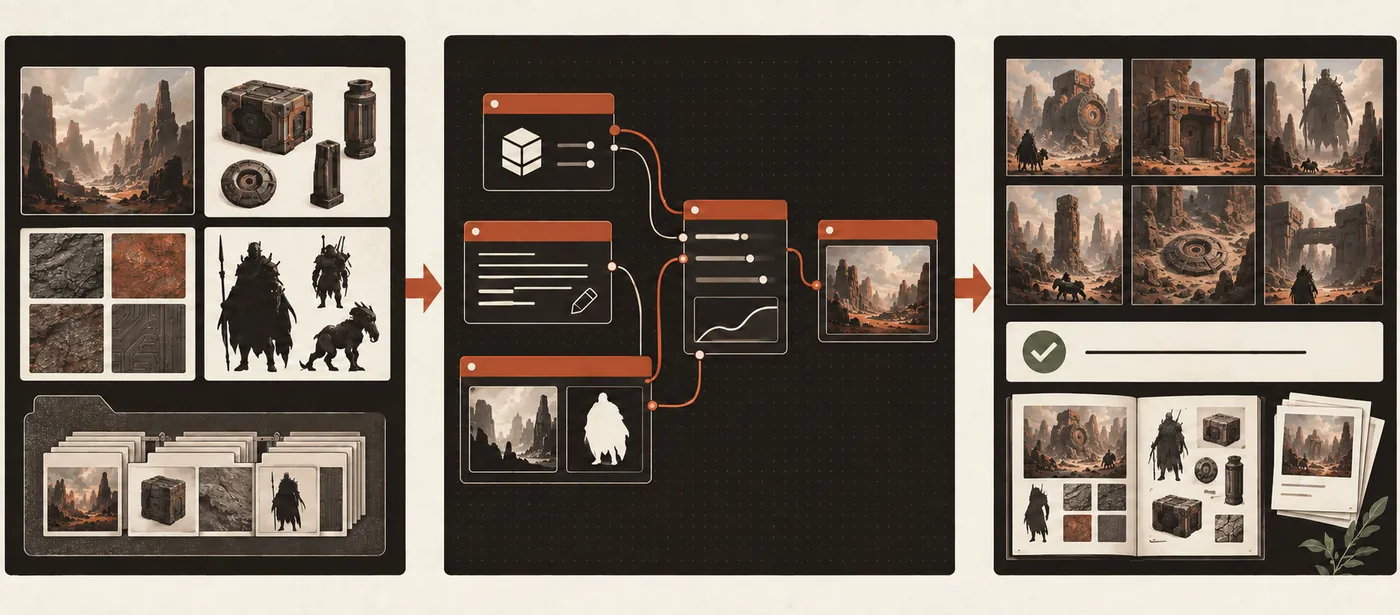
The team needed a repeatable production process, not a one-off generation experiment.
A custom LoRA and ComfyUI pipeline combined prompts, generation, deployment, documentation and team training into one workflow.
Cultural AI Models
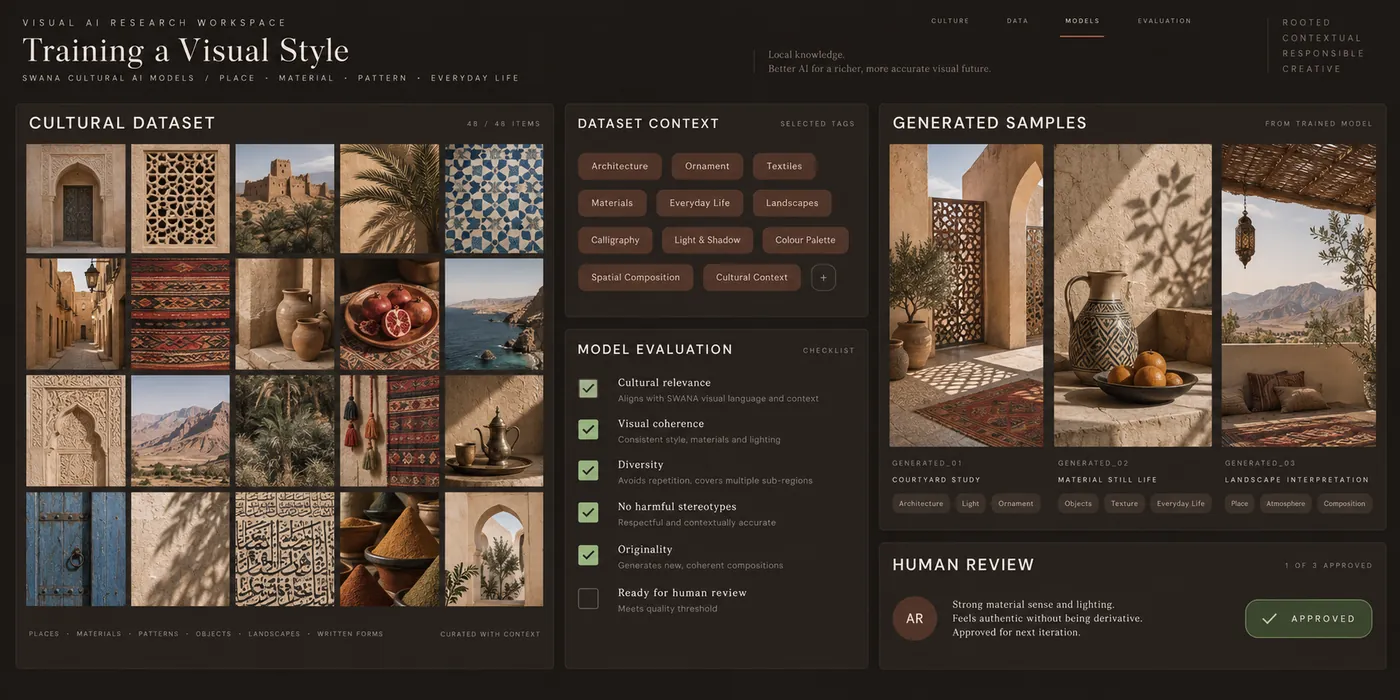
General-purpose models often lacked regional context and could reproduce stereotypes instead of culturally grounded visual language.
Dataset curation, model training, human evaluation and prompt templates supported more culturally aware image generation and model behavior.
Interactive reading practice for TXT and EPUB books
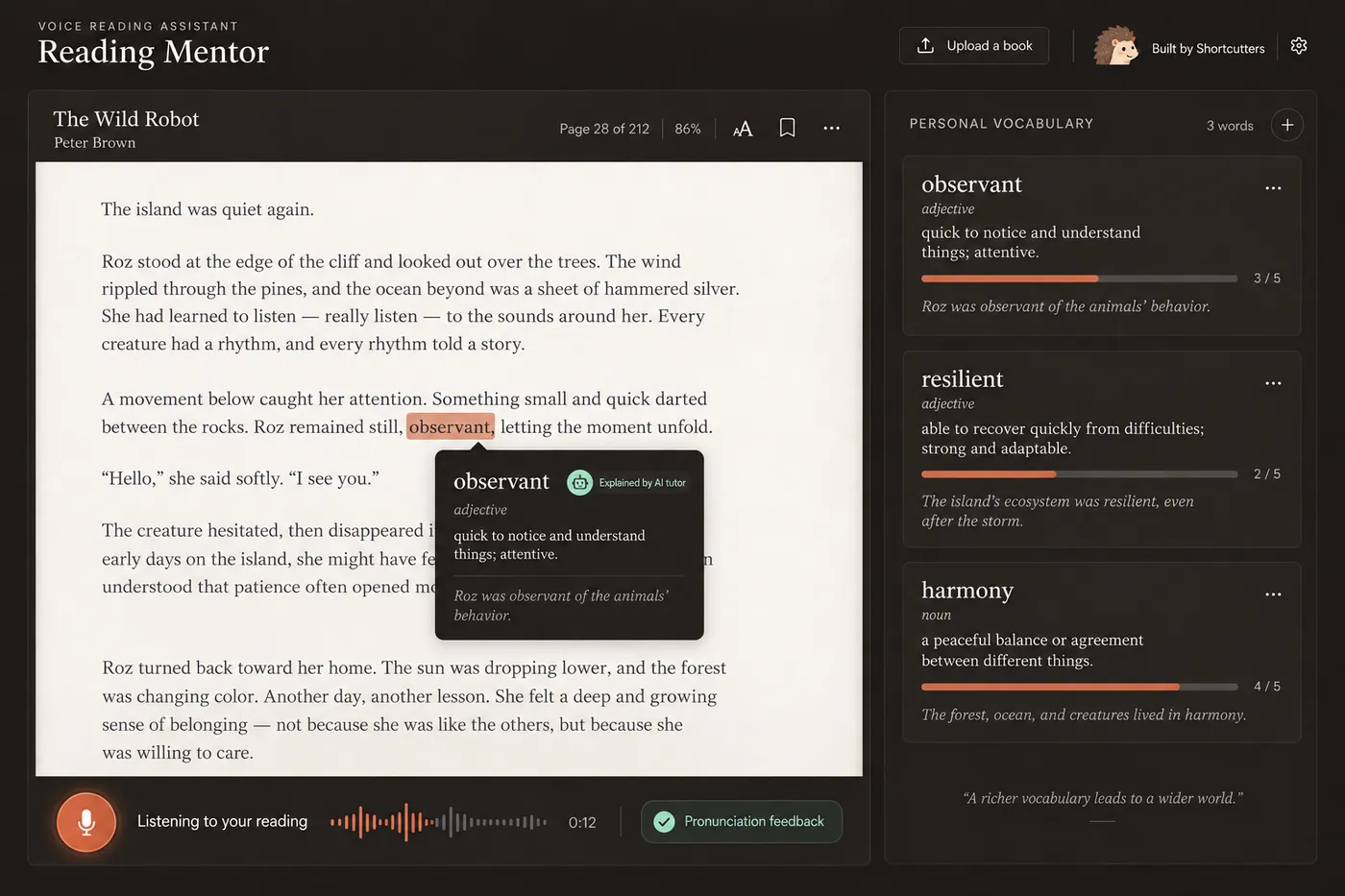
A book remained static text: contextual explanations, vocabulary memory and reading-aloud practice were not connected in one learning flow.
The prototype turns TXT and EPUB books into an interactive flow with voice interaction, contextual explanations, personal vocabulary and pronunciation feedback.
If something repeats, takes attention or constantly needs manual intervention, even a focused change can be worthwhile. We work with both teams and independent professionals.
Start by describing the situation. You do not need to choose a tool or know where to use AI in advance. Finding where it can help is our part.
Technical training is not needed to use a completed tool or system. We account for the team’s existing tools, create clear documentation and show how everything works.
We agree the scope and priorities around the budget while protecting what matters for the result. Sometimes a small prototype is the right first step, rather than a complete system.
The first conversation commits you to nothing. You can describe the situation and see whether continuing makes sense.
We do not replace a workflow for the sake of a new system. We look for where a focused solution can extend the tools you already use and fit naturally into the existing process.
Tell us what you work on — we will reply and suggest an appropriate next step.
Message Margarita on Telegram — no form, no brief. She will help you work out where to start.
Message Margarita on Telegram